Review the path a customer actually takes, one stage at a time. Finding the site, understanding the offer, and sending an inquiry are separate steps. A problem at one step will not be diagnosed by a total traffic number.
Start at the landing page
Use a real destination from a search or campaign report when available. Does the page answer the question or match the offer that brought the visitor?
If the message promotes a particular service, the destination should explain that service. A general homepage may require the customer to search again inside your site.
Look for the information that decides fit
Read the scope, service area, examples, and important conditions. Note what is missing before adding a stronger button.
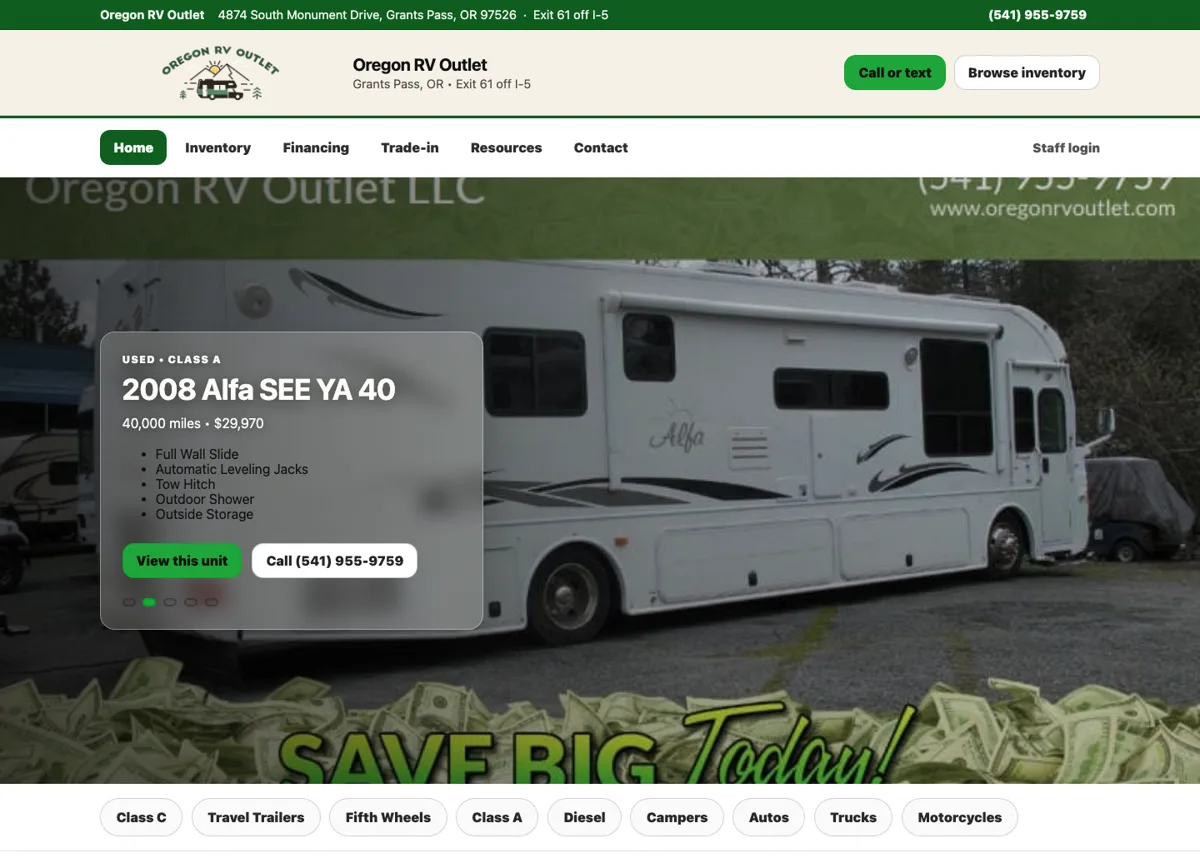
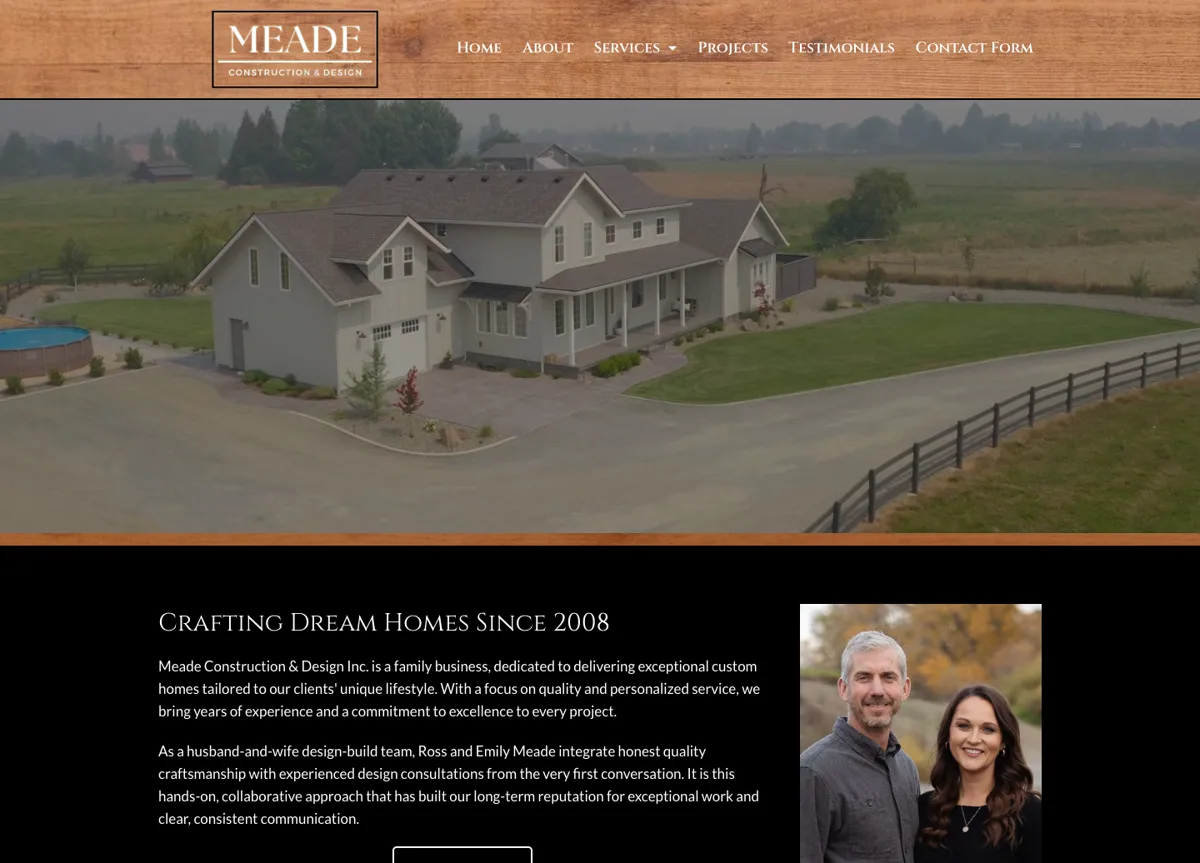
For Oregon RV Outlet, individual listings provide vehicle information before the contact action. For Meade Construction & Design, home galleries and the team introduction help a prospective client understand the work.
Follow the contact action
Check whether the form carries the necessary context and asks for reasonable information. Verify what happens after submission and what record the business receives.
Test a mistake as well as a successful path. A missing required field should produce an understandable correction, not a blank screen or a lost message.
Measure the stages separately
Record visits, contact actions, received inquiries, and any later business outcomes under separate definitions. A visit arriving from an AI service is still a visit until the customer takes another action.
Use the measurement guide to interpret the report. Our website design service plans the content and contact flow together so those stages connect.
Record where a test visitor gets stuck
Start with a specific task: “Ask whether this RV is available” or “Request an estimate for a building pad.” Open the likely landing page on a phone. Record the page used, the information needed, the next action and whether the resulting inquiry contains enough detail to answer.
A useful test note says, “The inquiry arrived without the vehicle name, so staff had to ask which unit.” A note saying “the journey could be more seamless” does not identify a repair. These are illustrative test notes, not measured results from a client.
Keep this exercise separate from conversion-rate reporting. It can reveal a reproducible problem with a form or page, but one person completing the task does not establish how often customers encounter it.

I run Good Creations in Grants Pass. I work directly with business owners on website design, content, and search. My work includes service writing, inventory websites, and custom publishing tools.
Meet Bob ↗