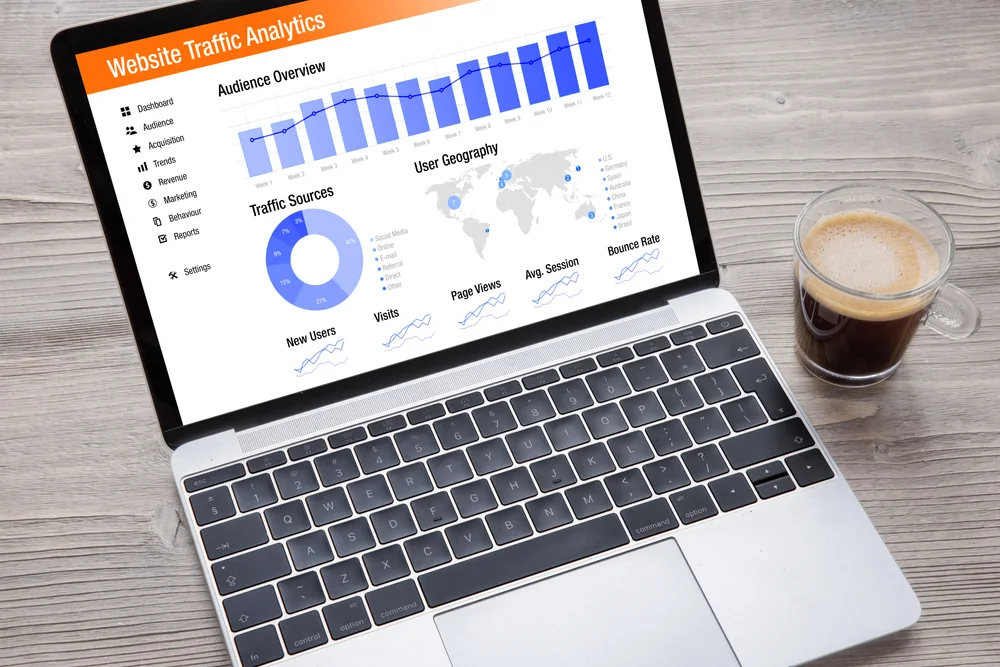
Open a traffic report with a question in mind. Which services are people looking at? Where do those visitors come from? Are inquiries reaching the business? You will get more from the numbers when you know what you are trying to learn.
Know the unit being counted.
A user, a session, and a page view are different measures. One person can visit several times and read several pages. Before comparing numbers, check what the tool counts and whether the reporting period is the same.
Search Console impressions and clicks describe activity in search results. They are not interchangeable with website sessions.
Look at the source and destination.
Where did visitors come from, and which page did they enter? A project article may attract people researching the subject, while a contact page visit may have different context. Compare the activity with the intended job of the page.
Keep traffic from tests, bots, or internal use in mind where the reporting allows you to identify it.
Connect activity to real inquiries.
Review saved forms and the business's own contact records. Check whether events labeled as inquiries actually represent successful submissions. A person tapping a phone link may or may not complete a call.
Use the data to identify a useful next investigation. If a relevant page receives visits but its form fails, fix the form. If the visits are unrelated to the service, reconsider the content or promotion. A smaller set of well-understood measures can support better decisions than a dashboard full of unexplained totals.

I run Good Creations in Grants Pass. I work directly with business owners on website design, content, and search. My work includes service writing, inventory websites, and custom publishing tools.
Meet Bob ↗