You know your business. Then someone asks what should go on your website, and suddenly the answer gets harder. Which services need a page? How many photos should you send? And what are you supposed to say about yourself? Start with the conversation you already have with a new customer. Your website needs to introduce the business, show what you offer, and give that person enough confidence to get in touch. Here is how to gather the material for it.
Tell people what they can hire you to do.
Write down your main services and the area you serve. Be specific enough for someone to recognize their own project. Kitchen remodeling tells a homeowner more than quality construction solutions.
Then add a few notes under each service: what the work includes, which jobs you want more of, and what customers usually ask before getting started. Those notes become the raw material for your service pages.
For example, a remodeler might explain whether they handle kitchens, bathrooms, or whole-home projects, then show a finished job in each category. That is an illustration of the approach, not a claim about a particular client.
Choose photographs you would show a prospective customer.
Start with your best examples of the work you want to be hired for. Send the original image files when you have them, along with a sentence explaining each project. That sentence matters. It tells us what we should help the visitor notice.
A useful note might read: Kitchen remodel in Grants Pass. We opened the wall between the kitchen and dining room and added the island.
Now there is a story to work with. The photograph shows the finished space, and the words explain the work behind it. Product businesses can do the same with photographs of an item, its details, and the ways people use it.
Put a person behind the business.
Your About page is a chance to introduce yourself before the first call. Explain who you are, how you got into the work, and what you enjoy about helping your customers. A photograph of you or your team makes that introduction more personal.
At Good Creations, that introduction is straightforward: I’m Bob, we’re family-owned, and we’re based in Grants Pass. You work directly with me. Your own introduction should be just as specific to the business you run.
Answer the questions that come up every week.
Think about your last few customer conversations. What did people need to know before they could move forward? Your service area, how to arrange a visit, what to send with an inquiry, or whether you handle a particular type of job might belong right on the service page.
Write the question as a customer would ask it, then answer it directly. If the answer depends on the job, explain what information you need. That gives people a useful next step.
Decide what happens when someone is interested.
Choose the action that suits your business: call, send project details, ask about an item, or book an appointment if you offer booking. Give people that option near the information that prompted their interest.
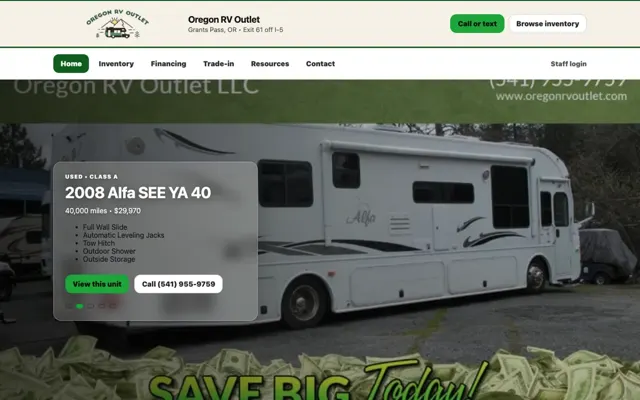
For Oregon RV Outlet, we put contact options alongside individual vehicle information. The shopper can ask about the RV they are considering. A contractor’s form might instead ask for the town, type of project, and a short description of the work.
Bring these five things to the first conversation.
- Your main services or products, and where you serve customers.
- A selection of original photos with a note about each one.
- A short introduction to you and the business.
- Questions customers regularly ask before they hire you.
- The way you want people to contact you or start a project.
Rough notes are enough to begin. You do not need to turn them into polished website copy before we talk. Tell me what you do and show me the work. We can build the pages from there.

I run Good Creations in Grants Pass. I work directly with business owners on website design, content, and search. My work includes service writing, inventory websites, and custom publishing tools.
Meet Bob ↗